
Breast Augmentation
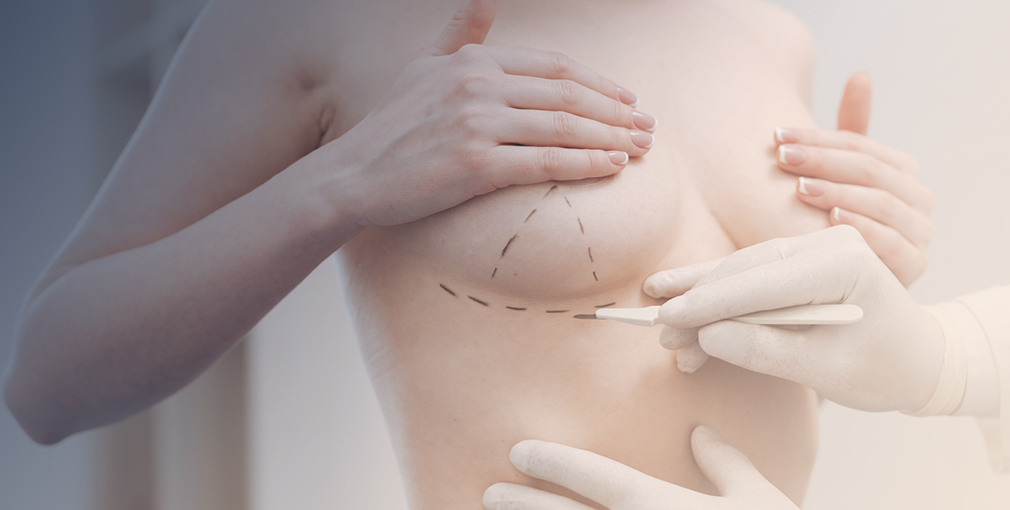
The breast is the most important detail of the female physique. Although its main function is to breastfeed and symbolize femininity, it is the most prominent element of female beauty. Women who do not find their breasts beautiful may feel incomplete. This can hurt their self-confidence. In this case, the only solution is breast augmentation surgery.
As a result of double or unilateral developmental defect of the breasts or due to weight gain and loss after pregnancy, the breast tissue may lose its volume and become smaller than normal. In these and similar cases, breast augmentation surgery should be performed in order to obtain larger, fuller, larger and more aesthetically beautiful breasts.
Can women who have had breast augmentation surgery with silicone breastfeed? Loss of Sensation in the Nipple? Can They Have Breast Cancer Screening Tests?
Breast augmentation surgery with silicone is absolutely not an obstacle to breastfeeding. Silicone implants usually do not cause loss of sensation in the nipple.
Silicones do not cause breast cancer and do not interfere with breast cancer screening methods (breast ultrasonography, mammography, breast MRI).
What are Silicone Implants, Are There Differences in Shape, Size, Tissue? Should Silicone Be Placed Behind or In Front of the Chest Muscle?
It is possible to examine silicone implants in 3 ways in terms of shape, content and surface structure.
For Shape:
-Drop (Anatomical) Prosthesis
-Round Prosthesis
The upper part of the drop prosthesis, which is called anatomical because it is more similar to the shape of the breast, is narrower and the lower part is wider.
In round prostheses, the horizontal and vertical base diameters are equal to each other.
Contextual:
-Silicone content
-Containing saline (saline)
There are prostheses filled with silicone gel and prostheses filled with physiological saline, that is, physiological saline in the market. In these, there is a silicone gel or physiological serum inside the solid envelope made of silicone.
Surface Direction:
-Rough Surface
-Flat Surface
It was determined that the formation of capsules around prostheses with a rough surface was less than those with smooth surfaces.
Silicone implants can be placed behind the pectoral muscle, in front of the pectoral muscle, or under the pectoral muscle membrane. Here, the thickness of the patient’s breast tissue determines where the surgeon will place the prosthesis.
Generally, in breast augmentation surgeries with silicone implants, we decide together with our patients the size of the prosthesis, the shape of the prosthesis, which plan the prosthesis will be placed on, the entry point of the prosthesis into the body.
Frequently Asked Questions about Breast Augmentation
We can generally examine the risks of this surgery in 2 categories. The first is the risks that may be associated with surgery. These can be conditions such as bleeding, infection, perforation of the pleura, and those due to anesthesia. This group of complications are risks that can occur in almost any surgical field.
Generally, bleeding and hematoma may come to mind as a result of sudden swelling and color change on one side and especially pain on that side. In such cases, if the amount of hematoma is large, it may be necessary to be operated again, causing bleeding, and washing and cleaning the pocket in which the prosthesis is located.
Although it is operated in a sterile manner and antibiotics are given before and after the surgery, in any surgical site infection that may occur, the silicones have to be removed and it can be waited for at least 6 months.
Very rarely, cases of perforation of the pleura may occur, and in such a case, it is treated by placing a chest tube.
The second group of risks can be considered as aesthetic problems specific to this surgery. This group of risks includes the fact that the asymmetry between the breasts that existed before the operation could not be eliminated, the breast tissues were enlarged below the expectation, the breast tissues were enlarged above the expectation, and the capsule.
What Is This Capsule?
Capsule is the most important problem of those dealing with breast prosthesis. Our body develops a capsule tissue around the substance against all foreign bodies, not just silicon. Sometimes this tissue hardens and thickens, and eventually the breast tissue becomes compacted and hard. Pain deformity develops in the prosthetic chest. There is no such thing as completely eliminating the capsule formation, but there are various approaches and methods to reduce it. The most important thing here is to place the prosthesis under the muscle and to increase the covering tissue on the prosthesis and to benefit from the effect of massaging the prosthesis by contraction of the chest muscle. There are also findings that the use of prosthesis with a rough surface creates less capsule tissue.
In order to answer this, we first need to determine how to determine the correct body size.
For example, when we measure the rib cage under the breasts with a tape measure, let's say the figure is 70 cm. never mind. Let's also do the same measurement from the nipples, let's say that this measurement is 80 cm. Let the difference be 5 cm. your correct bra size is 70 A. Because;
If your under bust circumference is between 65-70, size 70; 71-75 size 75; 76-80 size 80; If it is between 81-85, size 85; If it is between 86-90, size 90; If it is between 91-95, size 95; If it is 96-100, you can use a 100 size bra.
The difference between the second measurement and the first measurement is 0-6.5 cm. between A cup; 6.5-13 cm. between B cup; 14-19,5 cm. between C cup; 19.5-26 cm. your cup size is determined in the form of a D cup.
According to these measurements, the size of your breasts before the surgery can be estimated according to the prosthesis to be placed. From this point of view, it should not be forgotten that according to the breast measurement criteria, your cup size will change, not your body size, after your surgery.