
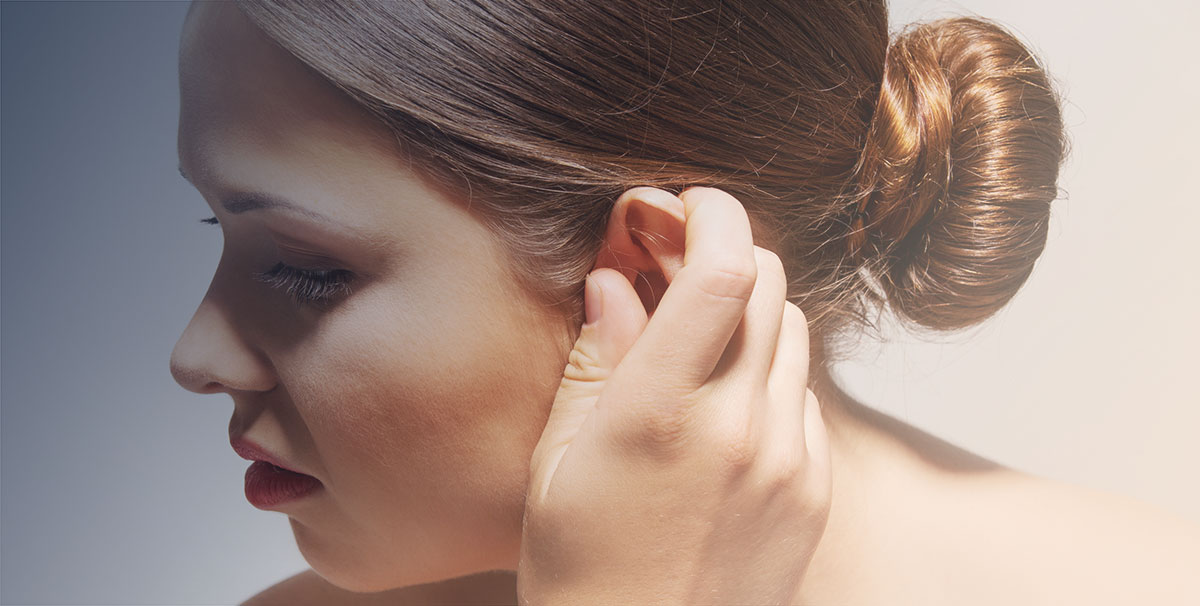
Prominent Ear Aesthetics
Our ears are visible because they are located in the head area.
Especially in men, the ears are more prominent because the hair is usually used short. In women, it creates a problem when the hair is collected. People who complain about their ears may have had a lot of trouble during their childhood years at school. The “prominent ear”, known as the prominent ear, is the most common ear deformity we see. In prominent ear deformities, the child’s possible psychological problems can be prevented by performing an operation between the ages of 4-6 before starting kindergarten and school in childhood.
According to my observations, individuals who are aesthetically uncomfortable with their ears mostly use the camouflage method with their hair. Girls, women and men wear long hair to cover their ears.
We evaluate our ears aesthetically in several ways. The first is size and smallness, the other is whether it contains some structural folds and the shape of the earlobe, the other is its placement and angle in our skull.
Sometimes our ears may be large or small according to certain proportions, their shape and angles may be normal. In this case, if it is large, it is possible to harmonize it with the face proportions. However, in the case of smallness (in the case of its complete absence or “microtia” where it is very, very small), we need slightly more troublesome surgeries. We shape the cartilage tissue taken from the rib cartilage of the person and form an ear with a few sessions of surgery.
If some of the curves of our ears are missing, then the ear will look more angled and prominent. This is how the deformity known as prominent ear occurs. In this case, with a small incision made behind the ear, permanent sutures are placed on the cartilage tissue so that these folds are formed, and the ear cartilage is folded. Thus, the scoop of the ear decreases and takes a flatter shape. In addition, by narrowing the angle between the ear and the skull, the ears are prevented from appearing prominently when viewed from the front.
Some people may also complain about the size of the earlobe or vice versa. The earlobes of our patients who complain about their size can be reduced, and those who complain about their small size can be slightly enlarged.
Sometimes, the “earring hole enlargement” deformity may develop as a result of women wearing heavy earrings. This deformity may progress too far and “earring hole rupture” may occur. In this case, these tissues are refreshed and closed again, thus minimizing the earring hole.
The wishes of our patients who applied for ear aesthetics are to bring the ears as close to the skull as possible. People who have had a problem for many years want the ears not to be visible at all, if possible. In fact, this request can be considered normal, because it is the accumulation of years. However, it should not be forgotten that; Our ears have a certain angle with the skull and should not be glued any further. Aesthetics are not fully attached ears. Our ears should be separated from our skulls with an average angle of 15 degrees.
Prominent ear aesthetics can be performed comfortably with local anesthesia. If the patient is not a child and will not be nervous about the surgery, it can be done painlessly with local anesthesia. However, it will be more comfortable to do it under anesthesia (general anesthesia) or sedation (light sleepiness) anesthesia for children and anxious patients.
Although there are different surgical techniques, the basic approach in all of them is to shape the ears with non-melting threads and to bring the ear closer to the skull with non-absorbable threads. In addition, my preference, especially in male patients, is to thin the ear cartilages a little by filing. The reason; The thick cartilage tissue is the possibility of reopening as a result of tearing the cartilage by pushing the permanent stitches we have thrown. If some of our ear cartilage becomes thinner, even if we do not stitch it, the scoop will not stand as much as before, and with the permanent stitches we will put, it will maintain the desired shape for life without opening. Sometimes it may be necessary to apply this technique to female ears as well.
Another part to be considered while performing prominent ear aesthetics is; ear lobule(earlobe). In prominent ear aesthetics, when the ear is brought closer to the skull, the earlobe can sometimes be more prominent than before. It is necessary to pay attention to this situation, it may be necessary to intervene in the earlobe in necessary patients.
It is a question that has been talked about a lot especially in recent years and that I have been asked from time to time; It is whether or not I do “ear aesthetics with thread”. It should not be forgotten that; All prominent ear aesthetics are done with rope anyway. “Aesthetics with thread”, which is made without making the incision behind the ear, provides a fast return to work, there is no incision. However, since it cannot perform some of the maneuvers I mentioned above (such as thinning the cartilage), the rate of reopening is much higher than in classical surgery. Even in classical prominent ear aesthetics, the most common complication is the opening of the sutures and the opening of the ear completely or partially due to cartilage tear. It can be seen in an average of 3-8 percent. In this case, a revision (correction) operation is absolutely necessary. Here, we need to perform a proper operation with a good surgical technique in order to prevent these from happening and to have the operation in one go. In addition, our patients should not disrupt their care and controls and strictly follow our recommendations.
In prominent ear surgery, the stitches we put in the ear are constantly pushed outward by our ear cartilages. In order to reduce the load on the stitches, we do bandages and pressure dressings for the first two or three days. After two days, the bandages should be opened and the ears should not be opened with an elastic bandage known as “tennis bandage” for the first ten days. During this ten-day period, our cartilages gradually begin to take shape, and the surrounding soft tissues adhere to their new shape. Now, the force of pushing outwards in our ears will be reduced. For the other ten days, it will be appropriate to wear the bandage while sleeping at night.
Since we usually work with young patients, they need to arrange a suitable time period for this operation, since they are very active both in terms of sports activities and in business life. On average, 5-7 days may be sufficient. If you can work with the tennis bandage, even 2 days can be enough.
My recommendations to our patients who are considering having prominent ear aesthetics;
First of all, they should know that this situation is not a situation that will cause distress in their psychology, and they should be aware that it is a fixable situation. They also need to be aware that ears are not perfectly symmetrical in every person. Minor differences can happen to everyone. Even if you have surgery, sometimes there may be a slight difference of two millimeters. So please don’t make this work an “obsession”. My advice to every patient who is considering plastic surgery; “looking at the whole picture”. When you look in the mirror, I suggest you look at your face and be happy with the change. Examining the nostrils one by one, looking back at the ears and asking, “Is it the same?” Asking yourself this question 20 times a day makes you unhappy. If you don’t have a clear ear structure anymore, if a nice curve is formed, if it looks as even as possible, you should be happy with it.
Prominent ear aesthetic prices, on the other hand, cannot be disclosed on our websites due to laws. It depends on how the surgery will be performed (local anesthesia, sedation and general anesthesia), where it will be performed (medical center, class b hospital, class a and a plus hospital) and who will do it (who will be your aesthetic surgeon).
Correction operations every plastic surgery
Doctors
As in our case, prominent ear aesthetics is more troublesome than the first surgery. Because tears in the cartilage are not repaired like skin and remain as tears. We have to go through the cartilaginous suture again through the cartilage on the side, and sometimes this point can be further away from the point we want. So doing it right the first time avoids these problems.